
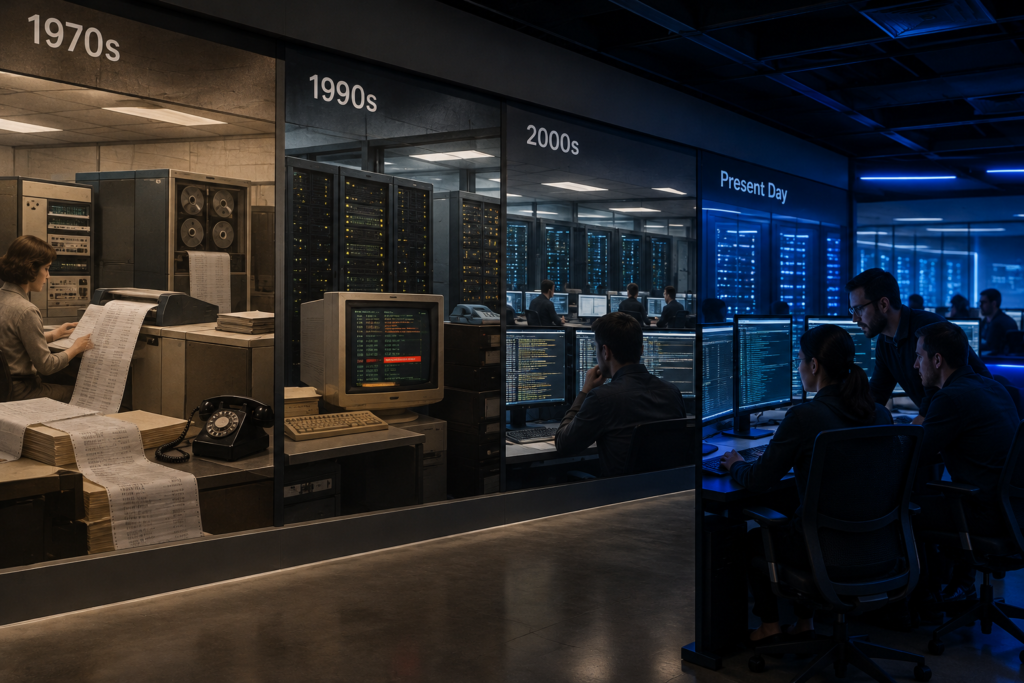
Security Operations Centers, often called SOCs, are now a core part of modern cyber defense. They are the teams, processes, and technologies that help organizations detect, investigate, and respond to security threats around the clock. While the term feels modern, the ideas behind centralized monitoring, incident response, and coordinated defense have deep roots in military operations, telecommunications, physical security, and early information technology management.
Understanding how SOCs evolved helps explain why they look the way they do today. Their history is not just a timeline of new tools. It is a story about changing threat landscapes, rising business dependence on digital systems, regulatory pressure, and the constant need to organize people and technology into a reliable defensive capability.
Why centralized security monitoring emerged in the first place
Before dedicated SOCs became common, many organizations handled security in fragmented ways. Network administrators watched uptime. System administrators reviewed logs when something broke. Physical security teams managed building access. Audit teams looked backward at compliance issues. Incident response, if it existed at all, was often informal and reactive.
This fragmented model worked only when computing environments were smaller, less connected, and less critical to day to day operations. In the early decades of enterprise computing, systems were expensive, centralized, and often isolated. Security concerns focused heavily on access control, user permissions, and system reliability. Threats certainly existed, but they were less continuous and less globally distributed than they are today.
As networking expanded and the internet became essential to business, organizations faced new realities. Attackers could probe systems remotely. Malware spread faster. Logs multiplied. The need for a central team that could watch multiple systems, correlate events, and respond quickly became obvious. This need was the seed from which the SOC grew.
Early foundations in military, intelligence, and operations rooms
The concept of a central operations center did not begin in cybersecurity. Long before digital security teams existed, governments and militaries relied on command centers to gather information, monitor changing conditions, and coordinate responses. Radar stations, communications hubs, and intelligence fusion centers all embodied principles that would later shape the SOC model.
These early operations rooms shared several defining traits:
- Centralized visibility across multiple sources of information
- Specialized personnel assigned to monitoring and analysis
- Documented processes for escalation and response
- Continuous or near continuous operational coverage
- A strong connection between detection and decision making
When information security matured as a discipline, it naturally borrowed from these operational models. The idea that defenders should have a single place to observe events, assess threats, and coordinate action was already well established in other domains.
Physical security also influenced the structure of later SOCs. Corporate security control rooms monitored alarms, cameras, and badge systems from a central location. They used shift work, incident queues, and escalation ladders. Many of the workflows that later appeared in digital SOCs, such as triage, incident logging, and dispatching responders, had close analogs in physical security operations.
Mainframe security and the pre internet era

In the mainframe era, roughly from the 1960s through much of the 1980s, computing security was focused on protecting scarce and valuable centralized systems. Organizations such as banks, government agencies, universities, and large enterprises depended on a limited number of core systems. Security priorities centered on authentication, authorization, job control, and data integrity.
Monitoring in this period was not yet SOC like in the modern sense. Logging existed, but the volume and speed of events were far lower. Security oversight often fell to system operators, auditors, or specialized administrators. Reviews tended to be periodic rather than continuous. If suspicious activity occurred, organizations often discovered it after the fact through audits or manual inspection.
Still, this era established important practices that would later become central to SOC operations:
- Maintaining audit trails
- Separating duties among administrators and operators
- Documenting access and changes
- Investigating anomalous user behavior
- Treating critical systems as high value assets
These were foundational ideas. Even without a dedicated SOC, organizations were learning that security required visibility, accountability, and structured investigation.
The networked enterprise changes everything
The rise of local area networks, client server computing, and eventually the public internet transformed security operations. By the late 1980s and 1990s, organizations were no longer protecting only isolated central systems. They were defending growing fleets of servers, desktops, routers, and externally reachable services.
This period saw the emergence of many technologies that would later feed into SOC workflows, including firewalls, intrusion detection systems, antivirus platforms, and centralized logging tools. Each of these generated alerts or records that could indicate malicious activity. However, the tools were often managed separately, creating a new challenge: too much disconnected information.
As attacks became more visible and more damaging, organizations started building dedicated security teams to monitor these systems. Early versions of SOCs were often informal. They might consist of a small group within network operations, information security, or IT infrastructure. Their mission was usually narrow, such as watching firewall logs, handling virus outbreaks, or investigating suspicious network traffic.
Several developments accelerated this shift:
- The commercialization of the internet
- The spread of email borne malware
- Increased remote connectivity
- Public awareness of hacking incidents
- Growing dependence on digital services for revenue and operations
By the end of the 1990s, the basic rationale for a dedicated security monitoring function had become much stronger. Organizations could no longer assume that perimeter defenses alone would keep threats out.
The impact of early cyber incidents and worms
Major security incidents helped convince leaders that security monitoring had to become more organized and continuous. Worms such as Morris in 1988 provided an early warning that networked systems could be disrupted at scale. Later outbreaks like Code Red, Nimda, SQL Slammer, Blaster, and Sasser demonstrated how quickly malicious code could spread across interconnected environments.
These incidents exposed several operational weaknesses. Many organizations lacked real time visibility. They did not know which systems were affected, how far a compromise had spread, or which defensive actions to prioritize. Security teams were often forced into ad hoc crisis management.
The lesson was clear: detection and response could not remain purely decentralized. Enterprises needed a function that could aggregate signals, assess scope, and coordinate containment quickly. This was a major step toward the modern SOC.
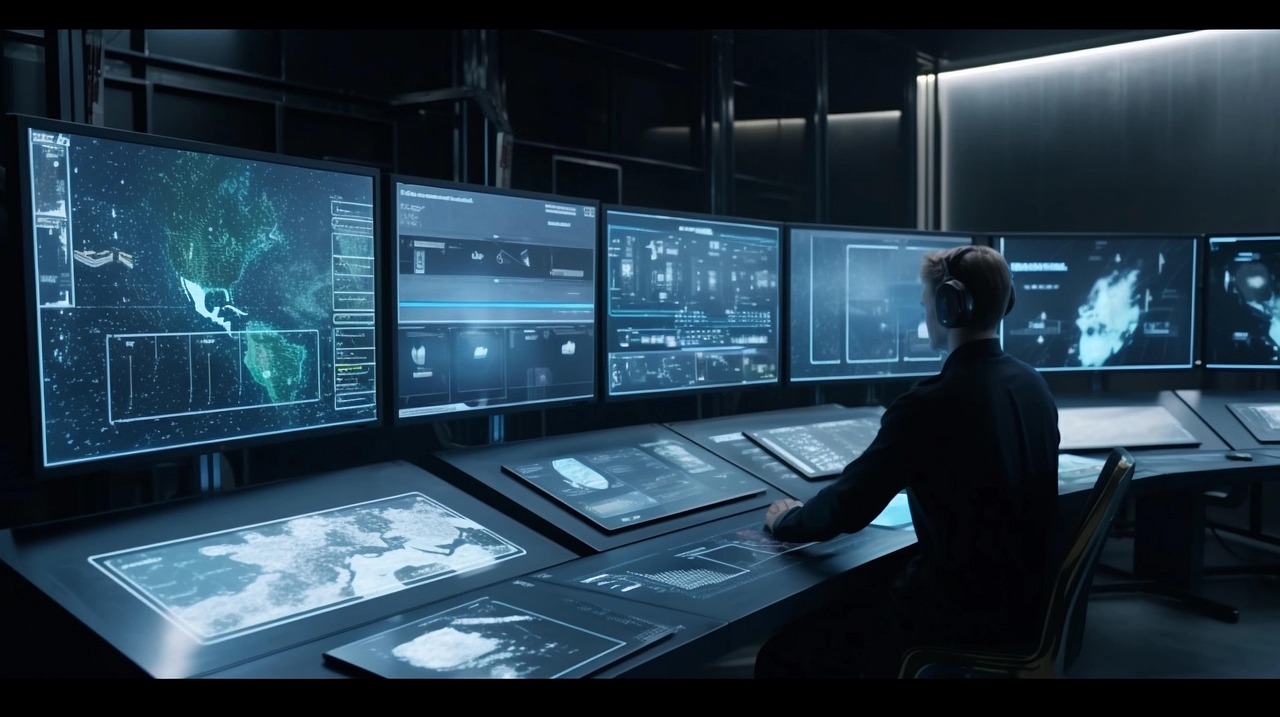
At the same time, government and academic institutions were helping formalize incident handling practices. Teams such as CERT Coordination Center at Carnegie Mellon University played a major role in shaping the field. Guidance on understanding cybersecurity incidents and structured response models reinforced the value of dedicated operational security teams.
The rise of dedicated SOCs in the 2000s
In the early 2000s, the SOC became a more recognizable organizational unit. Large enterprises, financial institutions, telecommunications providers, defense contractors, and government agencies began creating formal centers for security monitoring and incident response. These centers varied in size and maturity, but they shared a common purpose: centralize cyber defense operations.
A typical SOC in this era often included:
- Analysts working in shifts
- A ticketing or case management process
- Feeds from firewalls, intrusion detection systems, antivirus tools, and servers
- Escalation to incident responders or infrastructure teams
- Basic reporting for management and auditors
The visual identity of the SOC also emerged during this period. Large screens, alert dashboards, and 24 hour staffing became symbols of operational readiness. In practice, however, many early SOCs were still immature. They struggled with alert fatigue, inconsistent procedures, and limited automation. Analysts often spent large amounts of time manually reviewing events that turned out to be harmless.
Even so, the move toward formalization was significant. Security was no longer just a policy issue or a technical afterthought. It became an operational discipline with dedicated staff, measurable workflows, and a mission tied directly to business risk.
Compliance and regulation as growth drivers
One of the strongest forces behind SOC expansion was regulation. As digital systems became more central to finance, healthcare, retail, and critical infrastructure, lawmakers and industry bodies introduced stricter security requirements. Organizations needed not only preventive controls but also the ability to monitor, detect, and document suspicious activity.
Regulatory and standards frameworks did not always require a SOC by name, but they pushed organizations in that direction. Requirements around logging, incident detection, access monitoring, and response readiness all supported the case for a centralized security operations function.
Examples include:
- Financial sector oversight and expectations for fraud and security monitoring
- Healthcare requirements to protect sensitive patient information
- Payment card security standards requiring log review and incident response capability
- Government mandates for monitoring federal networks and critical systems
Standards bodies also helped shape best practices. The NIST incident handling guide became an influential reference for building repeatable response processes. As organizations tried to meet these expectations, many found that a SOC offered the most practical way to operationalize them.
The SIEM era and the quest for correlation
No history of SOCs is complete without discussing security information and event management, or SIEM. SIEM platforms emerged to solve a critical problem: security data was scattered across too many systems. Firewalls, operating systems, applications, network devices, and endpoint tools all produced logs, but defenders needed a way to collect, normalize, search, and correlate them.

SIEM became the central nervous system of many SOCs. It allowed analysts to:
- Aggregate logs from diverse sources
- Search historical data during investigations
- Build correlation rules to detect suspicious patterns
- Create dashboards and alerts
- Support compliance reporting and retention requirements
This was a major leap forward. Instead of reviewing devices one by one, analysts could work from a central platform. They could connect related events, such as repeated failed logins followed by a successful remote access session and unusual data movement.
Yet SIEM also introduced new challenges. Tuning detection rules required expertise. Log ingestion could become expensive. False positives remained a constant problem. Many SOCs discovered that buying a SIEM did not automatically create an effective security operation. Success still depended on people, process, and careful engineering.
How the analyst role evolved over time
The history of the SOC is also the history of the security analyst. In early environments, analysts often acted as generalists. They monitored alerts, examined logs, contacted system owners, and documented incidents. Over time, as threats and tools became more complex, specialization increased.
A common maturity path introduced tiered roles:
- Tier 1 analysts focused on alert monitoring and initial triage
- Tier 2 analysts handled deeper investigation and enrichment
- Tier 3 analysts or senior responders led advanced analysis and containment
- Threat hunters searched proactively for hidden adversary activity
- Detection engineers built and tuned rules and analytics
This structure helped SOCs manage scale, but it also created workforce challenges. Entry level analysts were often overwhelmed by repetitive alerts. Burnout became a common issue. Organizations learned that staffing a SOC was not just about headcount. It required training, career paths, documentation, and technology that reduced unnecessary toil.
The modern SOC increasingly values a blend of skills: technical analysis, communication, business context, and disciplined process execution. The best analysts are not simply tool operators. They are investigators who can form hypotheses, test evidence, and explain risk clearly.
From perimeter defense to adversary focused operations
In the early years, many SOCs were built around the idea of guarding the perimeter. Firewalls, gateways, and intrusion detection systems at the network edge were primary data sources. This made sense when organizations believed that keeping attackers outside was the main challenge.
That mindset changed as attackers became more sophisticated. Phishing, credential theft, web application compromise, insider misuse, and lateral movement showed that threats could bypass perimeter controls or originate from trusted environments. Once inside, attackers often moved quietly, blending in with normal activity.
This forced SOCs to become more adversary focused. Instead of asking only whether a firewall blocked an attack, analysts began asking broader questions:
- Has an attacker gained access using valid credentials?
- Are endpoints exhibiting suspicious process behavior?
- Is data moving in unusual ways?
- Are cloud identities being abused?
- Do multiple weak signals combine into a stronger indication of compromise?
This shift drove adoption of endpoint detection and response, user behavior analytics, threat intelligence, and richer telemetry from identity systems, cloud platforms, and applications. The SOC became less about watching a wall and more about understanding attacker behavior across the environment.
The influence of nation state threats and advanced persistent threats
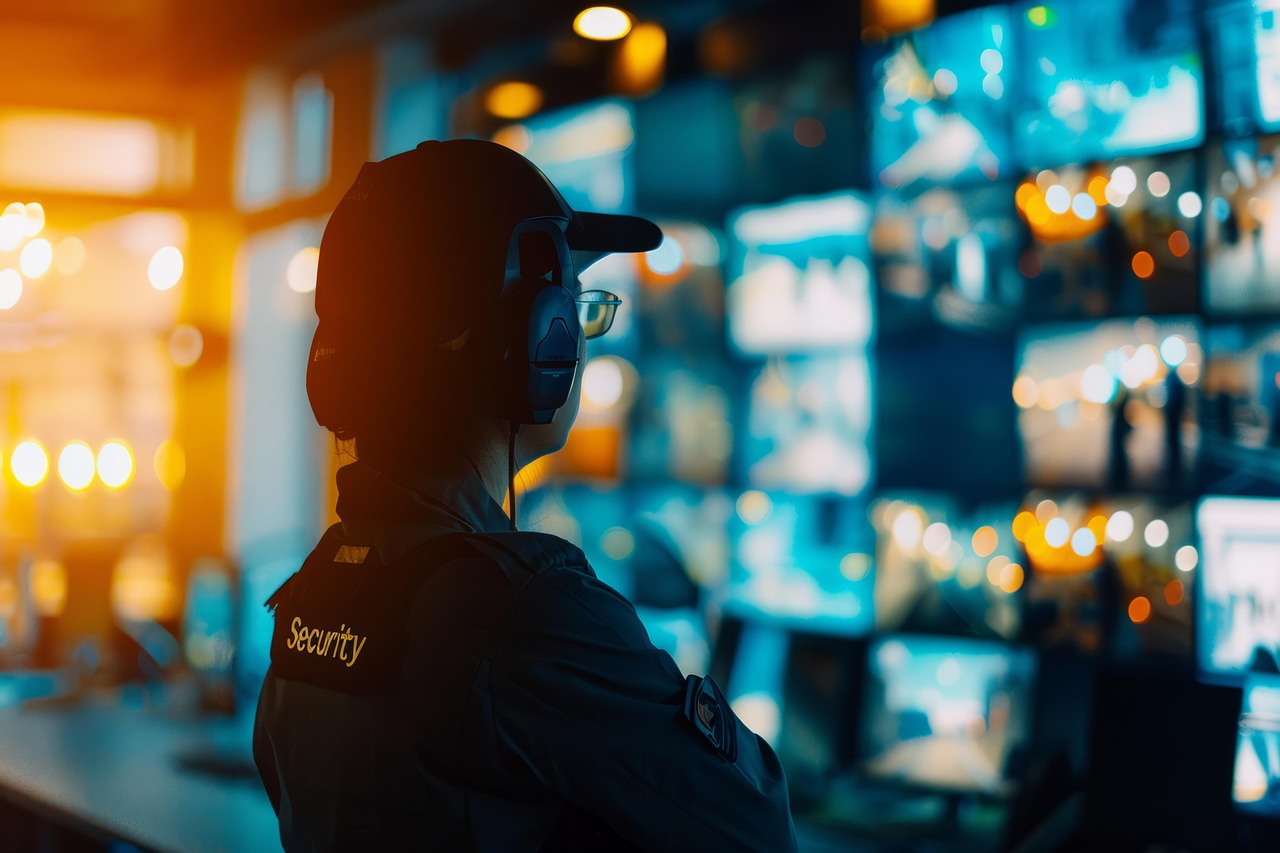
During the late 2000s and 2010s, public discussion of advanced persistent threats, often abbreviated as APTs, had a major influence on SOC design. High profile intrusions against governments, defense firms, media organizations, and large enterprises showed that some attackers were patient, well resourced, and highly targeted.
These campaigns highlighted the limitations of signature based detection and purely reactive workflows. SOCs had to improve in several areas:
- Long term investigation across historical data
- Threat intelligence integration
- Hunt operations based on hypotheses and attacker techniques
- Cross team coordination with forensics, legal, leadership, and public relations
- Protection of crown jewel systems and sensitive data
Frameworks such as MITRE ATTCK later gave SOC teams a more structured way to map adversary behaviors and identify detection gaps. This represented another stage in SOC evolution. The goal was no longer just processing alerts. It was building an intelligence informed defense capability.
Cloud computing reshapes the SOC
As organizations migrated workloads to public cloud platforms and adopted software as a service applications, SOCs had to adapt again. Traditional network boundaries became less meaningful. Security data now came from cloud control planes, container platforms, identity providers, and API driven services.
This created both opportunities and difficulties. Cloud environments often produce detailed telemetry and support automation well, but they also change rapidly. Assets appear and disappear quickly. Misconfigurations can expose data at scale. Identity becomes even more central because many cloud attacks rely on account abuse rather than malware.
Modern SOCs have had to expand their visibility to include:
- Cloud audit logs
- Identity and access events
- Container and orchestration activity
- Application and API telemetry
- Configuration drift and policy violations
This shift has also encouraged closer collaboration between SOCs and cloud engineering teams. Security operations can no longer be isolated from the way infrastructure is built and deployed. Detection and response increasingly depend on understanding infrastructure as code, ephemeral workloads, and shared responsibility models.
Automation, orchestration, and the modern SOC
As alert volumes grew beyond what human analysts could reasonably handle, automation became essential. Security orchestration, automation, and response platforms, commonly called SOAR tools, emerged to streamline repetitive tasks. These might include enriching alerts with threat intelligence, isolating an endpoint, disabling an account, or opening a case with the right context attached.
Automation changed SOC operations in important ways:
- It reduced manual work for common alert types
- It improved consistency in triage and response steps
- It accelerated containment for well understood scenarios
- It made playbooks more explicit and testable
Still, automation did not remove the need for human judgment. The best SOCs learned to automate narrow, repeatable actions while preserving analyst oversight for ambiguous or high impact decisions. Poorly designed automation could create its own risks, especially if it disrupted business systems or acted on low confidence detections.
Today, the most mature SOCs treat automation as part of a larger engineering discipline. They measure detection quality, tune workflows, and continuously improve playbooks based on real incidents.
The managed SOC and outsourced monitoring model

Not every organization has the scale or budget to build a full in house SOC. This reality led to the growth of managed security service providers and managed detection and response offerings. These providers offer monitoring, alert triage, and in some cases active response support for customers who need security operations capabilities without staffing a 24 hour team themselves.
This development is an important part of SOC history because it broadened access to operational security. Smaller organizations that could not build a dedicated center could still benefit from centralized monitoring and expert analysis.
At the same time, outsourcing introduced tradeoffs. External teams may lack deep knowledge of a customer’s environment, business processes, and risk priorities. The most successful managed SOC relationships usually depend on strong integration, clear service expectations, and shared visibility into incidents and response procedures.
Metrics, maturity, and the business view of SOCs
As SOCs matured, leaders increasingly wanted proof that they were effective. This led to a stronger focus on metrics and maturity models. Common measures included mean time to detect, mean time to respond, alert volumes, false positive rates, incident severity distribution, and coverage across critical assets.
These metrics helped SOCs justify investments and identify bottlenecks, but they also revealed a persistent tension. A SOC is not a factory producing identical units of output. Measuring only speed can encourage shallow investigations or excessive alert closure. Mature organizations learned that metrics must be interpreted in context and tied to risk reduction, not just operational throughput.
The business view of the SOC also changed over time. What began as a technical monitoring function became a strategic capability. Boards and executives started asking whether the organization could detect intrusions quickly, contain ransomware, protect sensitive data, and maintain operations during a cyber crisis. The SOC became central to answering those questions.
What the history of SOCs teaches about the future
The evolution of the SOC shows a repeating pattern. New technologies and new threats create more data, more complexity, and more pressure for coordination. Organizations respond by centralizing visibility, formalizing workflows, and building specialized expertise. Then the environment changes again, requiring another round of adaptation.
Several enduring lessons stand out from this history:
- Technology alone does not create an effective SOC
- Visibility without process leads to confusion
- Process without skilled people leads to shallow outcomes
- Detection must evolve with attacker behavior
- Security operations work best when aligned with business priorities
These lessons explain why the SOC remains relevant despite constant change. Whether the environment includes mainframes, on premises servers, cloud workloads, or hybrid identities, organizations still need a disciplined way to detect threats and coordinate response.
Takeaways
The history of Security Operations Centers is the history of cybersecurity becoming operational. What began as scattered monitoring and occasional incident handling evolved into a dedicated function with specialized analysts, centralized tooling, formal playbooks, and strategic importance. Along the way, SOCs were shaped by military command models, physical security control rooms, internet growth, malware outbreaks, compliance demands, SIEM platforms, cloud adoption, and the rise of sophisticated adversaries.
Today’s SOC is far more than a room full of screens. It is a living system of people, processes, data sources, engineering practices, and decision making under pressure. Its past explains both its strengths and its persistent challenges. Most of all, that history shows why the SOC remains one of the most important institutions in modern cyber defense: it gives organizations a way to turn scattered signals into informed action when speed, clarity, and coordination matter most.